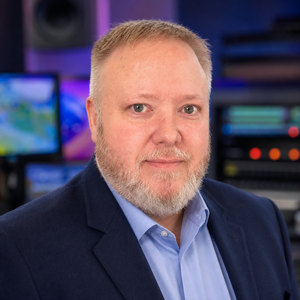
Imagine driving to another town for a concert you heard about on the radio, only to arrive and discover there was no concert. No stage, no performers, nothing.
That's what happened to some listeners during Tony Hayes' years at WZLX, a classic rock station in Boston. The station had created a “Fantasy Concert,” an imaginary event that sounded so convincing that people actually went looking for it.
“We went on the air that morning and stated that the concert would be in Enfield, Connecticut,” Hayes recalled. “After the concert ran for a few hours we were getting calls from their police department because all of these people were showing up in their town looking for the concert.”
Hayes summed up the experience in two words: “Good times!”
It's one of the more unusual memories from a broadcasting career spanning more than 50 years, with stops in Texas, Utah, Boston, Atlanta and Charlotte. Along the way, Hayes worked both on the air and behind the scenes, helping shape the sound of stations while building a career around something he loved from an early age.
It all started with music and listening to Chicago's WLS. When his family moved to Dallas, Texas, at age 12, Hayes discovered that two of his Little League baseball coaches, Michael O'Shea and Ken Dowe, were popular radio personalities.
“I went up to watch them do their shows and fell in love with radio even more,” Hayes said. “I also thought, what a great way to make a living!”
By 17, he was ready to give it a try. He visited KCLE, a country music station in Cleburne, Texas, not far from Dallas, and unexpectedly landed his first job.
“I don't know how but they hired me part time to do weekends,” he recalled.
Those weekend shifts eventually turned into full-time work. Hayes later moved to Amarillo, Texas, where he hosted afternoons and helped oversee the station's music and programming. From there, he headed to KFMY in the Provo-Salt Lake City area, hosting the midday show at a station playing the popular hits of the day.
His next move took him to WZLX in Boston, where he hosted middays and served as music director, helping choose the songs listeners heard.
Boston was a particularly memorable chapter. Along with the imaginary concert that sent listeners searching around Connecticut, Hayes remembers an actual concert the station helped host before a crowd of about 40,000 people.
“My ears rang for 3 days,” he said.
Following Boston, Hayes transferred to Atlanta to oversee programming at classic rock station WZGC. One of his proudest decisions there came when the Berlin Wall began coming down in November 1989.
Rather than covering the historic event entirely from Atlanta, Hayes sent two members of the station's morning show to Germany.
“We were only one of two stations in the U.S. who did that and it made for some great radio,” he recalled.
Hayes also spent time on the air at Atlanta's WPCH, an adult contemporary station, before another opportunity brought him to Charlotte.
For listeners who remember Lite 102.9, Hayes was a familiar voice during the morning commute. He credits Mike Break and Reta Thorn with bringing him to WLYT, where he was paired with Jen Byrum.
“I was fortunate to be brought to Charlotte by Mike Break and Reta Thorn to do mornings on Lite 102.9,” Hayes said. “I was paired with Jen Byrum and we had a good ten year run.”
The two shared plenty of laughs over the years, including a memorable encounter with Dolly Parton during a live interview at the station.
Hayes remembers Byrum being surprised by the country music star's small stature.
“I can't believe you're so tiny!” Byrum told her.
Dolly didn't hesitate with her response.
“Well everybody knows the two biggest things on me are my boobs and my mouth.”
“Dolly was the real deal and one of the kindest stars I ever met,” Hayes recalled.
But when asked what stands out most about his Charlotte years, Hayes points to something much more meaningful than a celebrity interview.
“The best thing we did was start the ‘Our Kids Come First Radiothon’ with the Children's Miracle Network to raise money for Levine Children's Hospital,” he said. “It was probably the most rewarding thing of my whole career.”
The fundraiser gave Hayes and Byrum an opportunity to use their morning show to help children and families in the Charlotte community. It's also a good example of what Hayes believes local radio should be doing.
He has watched the industry change considerably since his first weekend shift in Texas. Stations have changed owners, technology has made it easier to produce shows with fewer people, and listeners now have countless other places to find music, news and entertainment.
“Radio has changed so much over the 50 plus years that I was in it,” Hayes said. “Some good and some not so good changes, but that is the story with any industry.”
One change that concerns him is the growing number of radio shows recorded outside the cities where they're heard. It's a practice that allows companies to use the same personalities on several stations, but Hayes believes something important can get lost along the way.
“Right now radio is at a crossroads,” he said. “With so many voice tracked shows from other markets, I believe that even with that, you have to be local. The listener needs to know what is going on here, how it affects them. And don't lose the emotional attachment many feel with a radio station or personality.”
For Hayes, that relationship between a station and its listeners is what separates local radio from simply playing a collection of songs. People want familiar voices, information that matters where they live and personalities they feel they know.
Despite the challenges facing the industry, Hayes isn't ready to write radio's obituary.
“Many will say radio is dead. I disagree. As long as there is a microphone and a tower it will always be around.”
He believes broadcasters need to spend less time worrying about what radio used to be and more time remembering why they wanted to be part of it.
“I think broadcasters need to remind themselves why they got into the business in the first place,” Hayes said. “The bottom line is important and more important is the listener. If you don't capture them it affects that bottom line. So rediscover that passion you had at the beginning. Take risks.”
That willingness to try something different is something Hayes remembers from his years working for CBS Radio, particularly under former company president Dan Mason.
Hayes said Mason would listen when someone brought him an idea, offer his opinion and then leave the decision in their hands.
“But you do what you want to do, just be right.”
It's a philosophy that fits much of Hayes' career. From the imaginary concert in Boston to sending broadcasters to Berlin during one of the biggest news events of the century, he was willing to take chances when he believed an idea could make good radio.
Still, when asked if there was anything else he wanted people to know, Hayes didn't bring up another station, a famous guest or a memorable broadcast.
He talked about his wife, Shelly.
“I couldn't have had the career I had without someone special along for the ride,” Hayes said. “I've known my wife, Shelly, since we were both 16. Married for 49 years and any time there was a move involved she was all in.”
Anyone who has spent much time in broadcasting knows that a new opportunity can mean packing up and moving hundreds of miles away, sometimes with little certainty about what comes next. Hayes knows how much Shelly's support meant throughout those years.
“It's tough to find that in the Radio world.”
Looking back, Hayes has plenty of reasons to be proud. He's worked in some of the country's major radio markets, helped create memorable programming, brought a historic event to listeners from overseas and spent a decade as part of Charlotte's morning routine.
Yet the things he speaks most warmly about aren't necessarily the biggest stations or the most elaborate promotions. They're the children helped through a local fundraiser, the opportunities he had to try something different and the person who stood beside him through every move.
More than 50 years after walking into that country station in Cleburne, Hayes still believes in the medium that caught his attention as a kid listening to WLS.
And for the broadcasters who will carry radio into its next chapter, his advice is worth remembering: Find the passion that brought you into the business, don't be afraid to take risks, and never lose sight of the people on the other side of the radio.