On The Record: Darrell Jackson on 43 Years of Radio and Why Local Still Matters
Double-click to edit...
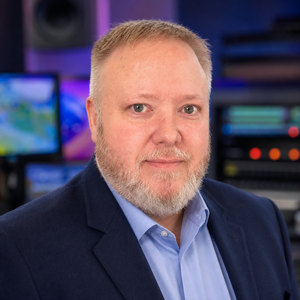
Darrell Jackson has spent more than four decades behind the microphone, working at radio stations across eastern and southeastern North Carolina. He's seen stations change ownership, watched technology transform the business and experienced the uncertainty of losing a job in an industry he loves.
Today, he's the midday host on WTXY 103.9 Rock Classics in Whiteville, North Carolina. But his radio career began long before computers took over the control room, when broadcasters learned their craft on turntables, cart machines and reel-to-reel tape recorders.
Jackson got his start in March 1983 at WEED in Rocky Mount. Three years later, in August 1986, he moved to Wilmington, joining WAAV-AM and WGNI-FM. Those stations would become an important part of his career, particularly WGNI, where he remembers a staff committed to serving listeners in a competitive radio market.
Although the station's music changed over the years, Jackson says its dedication to the community remained consistent.
“We had a very dedicated staff, from news to sales to programming,” he recalled.
That commitment was especially important during hurricane season. With Wilmington and the surrounding coastal communities vulnerable to tropical storms, WGNI took its responsibility to provide timely information seriously.
“We were known as your ‘Hurricane Information Station,’” Jackson said, remembering how the station kept listeners informed whenever hurricanes threatened the coast.
It's one of the things he remembers most about Wilmington radio. The competition was strong, but stations also understood the importance of being there for their communities.
Jackson's full-time run in Wilmington ended in early 2009 when he was laid off. He returned for part-time work during portions of 2009 and 2010 and also provided traffic reports for several Wilmington stations.
In November 2010, his career took him to Whiteville and WODR-FM, licensed to Fair Bluff and known at the time as Cool 105.3. He remained there until the station was sold on December 15, 2015.
Of all the radio stations he's worked for since 1983, Jackson says Cool 105.3 was his favorite.
After the sale, he returned to Wilmington in January 2016 for six months of part-time work at WLTT-AM, a station that has since gone off the air. He later spent more than a year away from broadcasting before returning to northeastern North Carolina, where he worked briefly at Country Superstars 102.3 WKJO from August through December 2017.
In January 2018, Jackson joined WTAB-AM in Tabor City, remaining there until February 2020. WTAB would eventually go silent in March 2025, ending nearly 71 years of broadcasting.
Jackson then found part-time work at WTXY in Whiteville, where he's been associated with the station on and off for more than six years.
Throughout his career, he's handled a variety of responsibilities, but the part of broadcasting that has stayed with him most isn't necessarily what happens inside the studio. It's what happens when broadcasters get out into the communities they serve.
Jackson remembers remote broadcasts from grand openings, local events and telethons, including occasions when radio stations teamed up with local television outlets. Those appearances gave listeners an opportunity to meet the people they heard every day.
“We felt it was our obligation to reach out and touch those who listen each and every day,” Jackson said.
He believes that kind of community involvement is missing from too much of today's radio.
It's one of several changes he's noticed since entering the business in 1983. Back then, new broadcasters learned to operate turntables, cart machines and reel-to-reel recorders. They also learned the technical side of keeping a station running, including how to turn a transmitter on and off.
Not every part of that experience brings back fond memories.
“If there was one thing I disliked, was splicing a cart (ouch!!),” Jackson recalled.
Today's broadcasters have tools that would have seemed remarkable when he started. Computers handle much of the work once done with physical recordings, while smartphones and social media make it easier to communicate with audiences and produce content.
Jackson appreciates those advances, but he's also concerned about where the technology could take the industry.
Artificial intelligence is one of his worries, particularly as radio companies continue reducing their workforces.
“I am concerned where AI may take broadcasting in the next few years, especially after the rounds of layoffs among media companies recently,” he said.
For someone who entered radio when learning the equipment was part of learning the profession, the changes raise questions about what future generations of broadcasters will experience and how much of the human element will remain.
Still, Jackson hasn't lost faith in radio.
Listeners today have more choices than ever. Music is available instantly through streaming services, news travels through social media, and podcasts offer seemingly endless programming on demand.
But Jackson believes there's something those alternatives cannot replace.
“Nothing can replace live and local radio.”
It's a simple statement that reflects much of what he's experienced during his career. From hurricane coverage in Wilmington to meeting listeners at community events, Jackson has seen how a local radio station can become part of the place it serves.
He's also seen how quickly things can change. Stations are sold, formats disappear, familiar voices leave the air and broadcasters sometimes find themselves looking for their next opportunity.
Jackson has experienced all of it. He's been laid off, worked part-time, stepped away from radio and found his way back.
Now, more than 43 years after his first job at WEED in Rocky Mount, he's still doing what he started in 1983.
The equipment is different, the business is different, and listeners have more ways to spend their time. But for Darrell Jackson, the most important part of radio remains the same.
It's the connection between a local broadcaster and the community on the other side of the microphone.