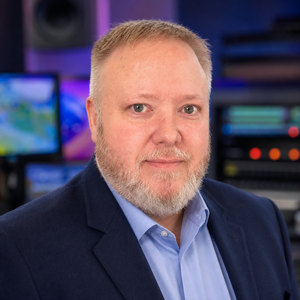
If you listened to Kiss 95.1 in Charlotte during the late 2000s and early 2010s, there's a good chance you remember Otis Maher. For nearly a decade, he was one of the station's familiar voices, entertaining listeners on the air and spending plenty of time meeting them around town.
It was a different time for Charlotte radio. Kiss personalities were regulars at nightclubs, concerts and events like Alive After 5 and Gravediggers Ball. The station wasn't just something people listened to on their way to work or school. It was part of the city's social scene, and Maher was right in the middle of it.
A lot has happened since those days. Maher has worked in Louisville and Atlanta, hosted morning shows, entertained crowds at Atlanta Braves games and experienced the uncertainty of losing jobs in an industry that's undergone some difficult changes. He's also found new ways to make a living doing what he loves.
These days, he's back on the air in Atlanta, hosting evenings on B98.5 and overseeing commercial and audio production for Cox Media Group. And after everything he's experienced, he's convinced that radio's greatest strength is something the industry sometimes seems to forget: the relationship between the people on the air and the people listening.
Maher's radio career started with a high school job-shadowing program in Illinois. He already knew he wanted to work in music, and spending a morning with Scott and Scott, a radio show in Peoria, gave him an idea of how he might make that happen.
"My first experience with radio came with a job shadow program at my high school. I knew I wanted to be in the music industry and radio seemed like a cool way in. Boy, was I right!"
When he learned that Illinois State University had a student-run radio station, he knew where he wanted to go to college. Once he enrolled, he wasted no time getting involved. Faculty advisor Deb Lesser helped him find his footing, and before long, he was also working part-time at WBNQ, a local station playing the latest hits.
"Tony Travatto and Russell Rush gave me so many opportunities to succeed (and fail at), but I knew then I was made for this."
His first full-time opportunity after college took him to U93 in South Bend, Indiana, where he hosted the nighttime show. He also spent countless hours listening to Chicago's B96, paying attention to the personalities and learning whatever he could from one of the country's major hit music stations.
Then came Charlotte.
Maher joined Kiss 95.1 in 2006, starting on nights before moving to afternoons. He eventually took on more responsibility behind the scenes, helping choose the station's music and make decisions about its programming. But when he looks back on those years, it's the people and the experiences outside the studio that stand out.
"What made my years at Kiss so special was the connection with the city. It felt like the heyday of Charlotte, hosting Bar Charlotte, all the Epicenter bars, Dixie's Tavern. Helping host Gravediggers Ball and Alive After 5."
For listeners who were around during those years, the places he mentions will probably bring back a few memories. Kiss was a regular presence wherever people gathered for music, entertainment and a night out. Its personalities weren't strangers whose voices came out of the speakers. They were people listeners could actually meet.
"Kiss was so ingrained in the culture of the city and all the live events we could offer for people looking to have a blast."
Charlotte also gave Maher something far more personal than a successful radio career. He met his wife through the station, and the couple welcomed their first child while living here. That child is now 13.
"Charlotte grew me into the talent I am today and still holds dear to my heart."
After nearly 10 years, Maher decided it was time for a new challenge. He left Kiss to take charge of 99.7 DJX in Louisville, Kentucky, where he was responsible for the station's overall sound and programming while continuing to host an afternoon show.
His next move took him to Atlanta and 94.9 The Bull, where he made the switch from playing the latest pop hits to country music. It was a change that helped him better understand just how personal the relationship between a station and its listeners can become.
"The country music format was a big catalyst in showing how much a 'family' connection can drive passion for what you do from listeners."
Over the years, Maher has come to believe that being entertaining is only part of the job. Making someone laugh is great, but making that person feel like they know you is what keeps them coming back.
"My journey in radio has taught me that no one does human connection like radio. When you entertain, people have a good time, but when you make them feel and connect, they never forget it. Some even become lifelong friends."
It's also changed the way he approaches his own show. Rather than spending his time talking at listeners, he wants them to feel like they're part of the conversation.
"I want to make each break about my audience and feel like a great friend that is just making them laugh and living life together."
Of course, building a career in radio hasn't always been easy. Maher has been caught up in corporate layoffs more than once, losing positions through decisions that were largely beyond his control. Anyone who's worked in broadcasting over the past several years knows how quickly those decisions can change someone's life.
Maher admits those experiences forced him to think differently about his future, but he hasn't allowed them to define it.
"Every time I've been let go, it's forced me to dig deep for more talents I possess and find ways to utilize them for my benefit."
He started his own voiceover and production company, recording commercials, doing voice acting and helping produce podcasts and other audio projects. He also discovered how much he enjoyed hosting events in front of live audiences, a passion that eventually took him onto the field as an in-game host for the Atlanta Braves.
"It's all about diversifying your talent and using your skills for something you may not have even dreamed up."
Through the setbacks and unexpected opportunities, his faith has remained an important part of how he looks at life.
"I'm a constant optimist and that's easy knowing that God has a plan that I can't see."
His return to Atlanta radio at B98.5 has brought him back to something he believes is becoming increasingly important: having local people on local radio stations.
For years, broadcasters have been looking for ways to reduce expenses. That often means replacing a hometown personality with a show heard in several cities, sometimes hosted by someone hundreds of miles away. Other stations record portions of their programming in advance, making it possible for one person to appear on the air in multiple markets.
Those approaches can save money, but Maher believes they can also take away the very thing that makes radio different from the other entertainment choices people have today.
"Radio's magic is personal human connection. The streaming apps and podcasts don't live where your listener lives. They don't drive the same daunting roads, and experience the same weather and same local tragedies and triumphs."
To him, being local means more than mentioning the city's name between songs. It means knowing the community, understanding what people are experiencing and being someone listeners can run into at the grocery store, a concert or a neighborhood event.
"If you dig deep into being locally embedded in your communities and allowing opportunities for listeners to run into you, hang out with you, feel personally connected to you, it's hard to beat."
He's concerned that too many radio companies are moving in the opposite direction, cutting local positions and replacing familiar voices with programming that could come from just about anywhere.
"Radio's race to get smaller and syndicate from all over is detrimental to its growth. Then you just turn into another streaming platform that is disconnected from what makes you special."
He points to B98.5's commitment to local personalities as an example of what stations can do differently. And he believes the consequences of abandoning that connection will eventually show up in both the number of people listening and the advertising dollars stations bring in.
"Like B98.5, someone across the street will provide all that while you have meetings about why nothing is growing and your sales keep declining."
That doesn't mean Maher thinks radio should operate as though streaming services, podcasts and social media don't exist. Quite the opposite. He believes today's broadcasters have more opportunities than ever to connect with their audiences, provided they're willing to use them.
A personality who once had only a few minutes between songs to make an impression can now continue that relationship through Facebook, Instagram, podcasts and other platforms. Listeners can see what that person is doing outside the studio, join conversations and become part of a community that extends well beyond the radio.
"Use a 360 approach to building your tribe on your show calling back to socials, on socials calling back to your show, make both interactive and connected."
He points to Maria Palmer of Chicago's Morning Mosh Pit and Seattle radio personality Mason as examples of people who understand how to make those connections work.
"Make sure you're finding your unique voice and stick to it."
It's advice that reflects his own experience. Maher has worked in different cities, played different kinds of music, held management positions and found himself having to start over when jobs disappeared. Yet the thing that first attracted him to radio as a teenager in Illinois is still what keeps him interested today.
"Radio has evolved and changed in the two decades I've been doing it so much, but what never changes is your ability to entertain and connect."
For Maher, the technology, music and business may keep changing, but the opportunity to make someone laugh, brighten their day or simply make them feel like they're spending time with a friend is still there.
And that's something no playlist can replace.