On the Record: Mark Starling on Local Radio, Hurricane Helene and Why Being There Still Matters
Double-click to edit...
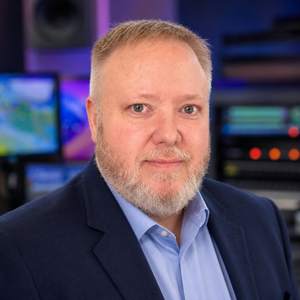
Mark Starling was drawn to radio for a pretty simple reason: it didn’t feel like every other job.
“There was no heavy lifting or working in the heat,” he joked. But seriously, he said radio gave him something different — a chance to be creative and talk with people he probably never would have met otherwise.
That career took Starling through several markets before he landed in Western North Carolina. For the past 11 years, he’s hosted First News on 570 on NewsRadio 570 WWNC/92.9 FM in Asheville, where he also serves as news director.
His path to Asheville was a little different from the usual radio career. Instead of moving from a smaller market to a bigger one, Starling left Orlando and headed to Western North Carolina.
“I can honestly say that it was not only the best career choice for me but the best personal life choice as well,” he said.
Starling calls his 11 years hosting mornings at WWNC “the ride of a lifetime.” Then came Hurricane Helene, and the role of local radio suddenly took on a much greater importance.
The storm devastated communities across Western North Carolina and knocked out many of the ways people normally communicate. For Starling, Helene didn’t necessarily teach him something new about radio. It reminded him of what local broadcasters have known for a long time.
“The biggest lesson learned wasn’t a lesson we didn’t already know, but more of a reminder of the importance of local radio done by local people,” he said.
It was also a reminder of the strength of the people listening on the other side of the microphone.
“Radio has proven itself time and time again over the last 100 years,” Starling said. “WWNC and our sister stations only added to that mountain of proof that local radio can save lives and help keep people safe when disaster strikes.”
That idea — local radio done by local people — comes up again and again when Starling talks about the business. It’s also what he believes makes a good morning show, especially now that listeners have more choices than ever.
“Local content done by local people is what makes a strong morning show,” he said.
That doesn’t mean national stories don’t belong on a local show. Starling believes the key is making those stories relevant to the people listening. As he puts it, the question should be, “How does that national story affect us locally?”
National shows have their place, he said, but there’s a connection they simply can’t duplicate from hundreds or thousands of miles away.
“Listeners can sniff out an imposter,” Starling said. “They’ve lived here their entire lives in most cases.”
Radio has changed plenty during Starling’s career. Podcasts, streaming and digital platforms have given people more ways to find news, information and entertainment than ever before. Yet Starling sees those choices as one of the reasons to be optimistic about the future of AM and FM radio.
“Listeners have a ton of options, yet they continue to show up for radio every single day,” he said.
For Starling, live radio still offers something different.
“You can’t interact with a podcast in real time,” he said. “Nothing else delivers the information you need consistently like live and local radio does and has for more than 100 years.”
But keeping radio relevant takes more than putting a local name on a station or show. Starling believes broadcasters need to get deeper into the communities they serve, find out what matters to their listeners and then do something with that knowledge.
“I think, for broadcasters, the answer is to dig deeper into their communities,” he said. “Find the things that matter to their listeners and act on them.”
And that, he believes, is where radio can go beyond simply reporting what’s happening.
“Radio wasn’t designed to just report problems, that’s only half of it,” Starling said. “The other half is being able to activate an audience to help solve problems and affect change.”
It’s a philosophy that became especially clear during Helene, but it applies on ordinary mornings, too. Radio will keep changing. So will the technology and the ways people listen.
For Starling, what matters most hasn’t changed nearly as much: know the community, be part of it and be there when people need you.