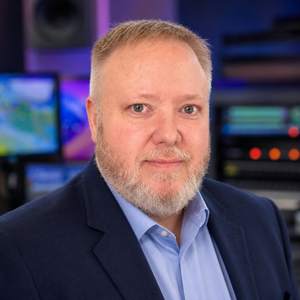
10 Questions with Joe Greene of WNCW 88.7 FM
Joe Greene caught the radio bug early.
He grew up listening to his local stations, but after dark, radio opened up a much bigger world. Powerful AM stations like WLS in Chicago and WOWO in Fort Wayne came rolling in at night, bringing music and personalities from hundreds of miles away.
For a while, Greene thought he might become an architect. That changed by the time he reached his early teens, and watching WKRP in Cincinnati only made his interest in radio stronger.
Nearly four decades later, radio is still very much a part of his life.
Greene is a music host and producer at WNCW 88.7 FM, where he can be heard during the week and Saturdays on Goin' Across the Mountain. Before coming to public radio, he spent nearly 30 years working in commercial radio across different formats and markets.
In this installment of Frequency Files: 10 Questions, Greene looks back at how he found radio, the people who helped him learn the business, some memorable encounters with musicians, and why he believes listeners still want something technology can't replace: a real person on the other side of the microphone.
1. For readers who may not know you, tell us a little about yourself and how you first got interested in radio.
I grew up listening to local radio, but also the big-market hotshots on the AM skywave at night. WLS, WOWO and the others would come beaming in with the hits.
I wanted to be an architect until I was about 12 or 14, but then the radio bug bit me. WKRP in Cincinnati really drove it home.
2. You’ve spent four decades in broadcasting. What was it about radio that captured your attention and kept you coming back year after year?
I liked the idea of having a voice and personality that appealed to people even though they couldn’t see me.
I also liked the creativity of being live on the air and having to think on my feet to add something meaningful to the music. And I’ve always loved the craft of production and the skills that go into doing it well.
3. As an alumnus of Isothermal Community College, what does it mean to you to now work at WNCW, which is owned by the college?
My radio journey actually started before ICC. I was a 19-year-old intern at Q-94 in Richmond, working with the Q Morning Zoo and newsman John Ogle. I learned a lot about how radio is done just by being around those pros.
I had to leave Richmond sooner than I wanted to, but after moving to North Carolina, I was fortunate to meet Andy Abdow, who was the radio instructor at ICC at the time. His guidance helped me bring all those skills together and really understand the craft.
I’m happy to have come full circle and ended up at WNCW, where we still have live personalities on the air and some freedom in what we program.
4. WNCW has developed a loyal following across the Carolinas and beyond. In your view, what makes the station so special?
From the beginning, WNCW has given music lovers an alternative to the repetitive and limited listening experience you often get with commercial radio.
We’re committed to supporting musicians and giving independent artists a voice, especially those who might otherwise be overlooked or ignored by commercial radio.
5. Listeners hear you during the week and Saturdays on Goin' Across the Mountain. What do you enjoy most about sharing music with your audience?
The most rewarding part is when a listener is moved enough by a show, or even just a set of music, to take the time to call or send an email and tell us how much they enjoyed it.
6. Bluegrass has deep roots in the mountains of North Carolina. What is it about the music that continues to connect with listeners today?
I think a lot of the subject matter in bluegrass songs connects with people and their everyday lives.
There’s also a more organic feel to the arrangements, and I think people really appreciate the skill of the musicians playing it.
7. Over the years, you’ve interviewed and met countless musicians. Is there a particular artist, performance or moment that stands out?
There have been way too many special experiences to pick just one.
A few personal highlights include introducing the Atlanta Rhythm Section on stage three different times during my career. I’ve also had experiences with artists like Charlie Daniels, Kenny Chesney and Béla Fleck. Those moments were just surreal.
Another one that still makes me laugh was interviewing Sam Bush here at WNCW several years ago. Off the air, he told me a hilarious story about Jimmy Martin. I still laugh when I think about it.
8. Radio and the music industry have changed dramatically during your career. What are some of the biggest changes you’ve witnessed, and what do you think radio still gets right?
Radio certainly has changed a lot since I started, and many of the changes in technology were probably inevitable.
But I don’t think the listener’s desire to connect with a real human personality has changed all that much.
I think WNCW proves that every day.
9. When you’re away from the microphone, what are some of your hobbies, interests or favorite ways to spend your time?
I used to have more outside interests than I do now. I’m pretty boring in that respect these days.
But I really value the time I get to spend with family and friends.
10. What would you like listeners to know about WNCW and the people who work behind the scenes to bring the station to life every day?
The people and voices you hear on WNCW really are nice people, and they love the music just as much as the listeners do.
They also genuinely care about whether what they’re doing and what they’re playing connects with and pleases our listeners and members.
Bonus Question: Is there anything about your career, WNCW, bluegrass music or the future of radio that we haven’t discussed that you’d like readers to know?
I spent nearly 30 years of my career in commercial radio, working in different formats and different markets.
Whether it’s commercial or public radio, the nuts and bolts of the business are really the same. The biggest difference is the style of presentation. You have to pay attention and learn how to adapt.
Making that change has been a learning experience for me, but I’m very thankful to be at WNCW and to be able to do what I do every day.